teamspace

Ticketing software: every request becomes a ticket.

Ticketing software takes in service requests from every channel and turns them into a guided ticket with a unique number. In teamspace, an incoming email recognises the contact, the channel settles responsibility, and from the ticket you log time or write a receipt. Part of Service Desk in teamspace, with no per-module surcharge.
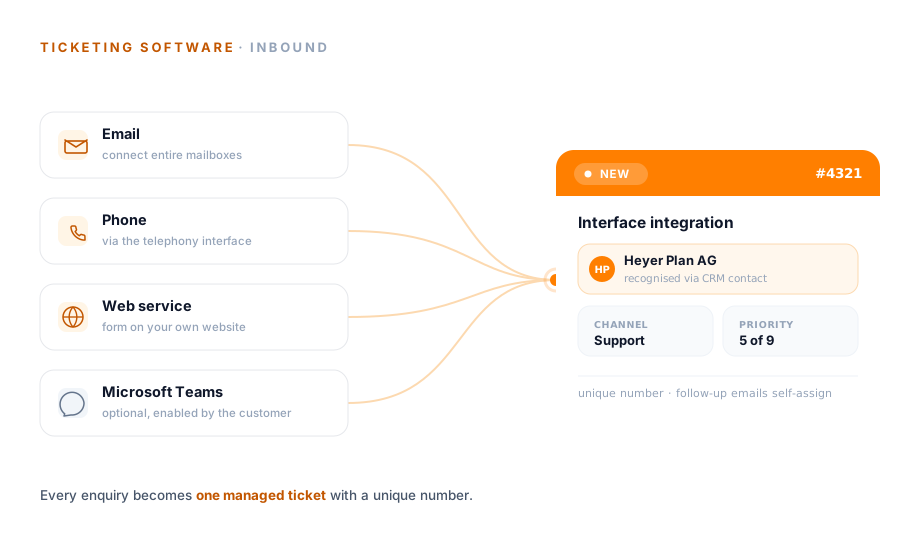
teamspace ticketing software: four incoming channels (email, phone, web service, Microsoft Teams) run through connectors into a single ticket numbered 4321, recognised at the CRM contact Heyer Plan AG, with channel Support and priority 5.

The bottleneck

Still handling every request through a shared mailbox?

  • An email lands in the shared mailbox and no one knows who is taking it on.
  • Two people reply twice, or a request sits untouched for three days.
  • Follow-up emails scatter across the thread instead of staying with the request.
  • On the phone there is no overview of what is already open for the customer.

Ticketing software gathers these requests under one number and shows at any moment whose turn it is.

Inbound

Four channels feed into one ticket.

Service requests arrive in different ways. teamspace takes them all in and turns each one into a guided ticket with a unique number, attached straight away to the right contact.

E-Mail

ganze Postfächer

Telefon

Telefonschnittstelle

Web-Service

auf der eigenen Website

Microsoft Teams

optional, vom Kunden aktiviert

Neu #4321

Anbindung Schnittstelle

Heyer Plan AG

am CRM-Kontakt erkannt

Kanal

Support

Priorität

5 von 9

Jede Anfrage wird ein Ticket mit eindeutiger Nummer. Folgemails ordnen sich darüber von selbst zu.

Assignment

The email already knows the customer.

A request comes in by email, and before anyone even opens the ticket, teamspace knows who it is from. The sender address matches the right entry in the CRM, and the ticket sits at the customer record straight away.

  • A unique number for every request: follow-up emails carry it in the subject line and automatically land in the same ticket, rather than opening a new request.
  • Three ticket types cover everyday work: internal for your own coordination, from email for customer communication, and on behalf, raised from a phone request.
  • Closed tickets reopen on their own when the customer comes back with a query, and the history stays in one place.

Scope

What ticketing software has to carry.

Three things set a guided ticket system apart from a shared mailbox. teamspace brings them from a single database.

Requests gather under one number

  • Inbound from email, phone and web service
  • Unique ticket ID, follow-up emails sort themselves in
  • Priority from 1 to 9, categories and colour markers

Responsibility is always clear

  • Channels separate topics and teams
  • The owner works it, the assignee reads along
  • Escalation releases a ticket left sitting

Effort stays billable

  • Time straight from the ticket onto the project
  • To the minute, in intervals or at a flat rate
  • Internal and goodwill time can be excluded

Responsibility

The channel decides who reads along.

So that not everyone sees everything, a ticket does not land in one big pool but in a channel. Each channel sets who works a ticket and who only reads along. That way service requests go to the helpdesk and sales queries to the account team, kept apart.

  • Any number of channels for support, sales, internal or accounting, each with its own responsibility.
  • Watchers read along on a ticket without working it; the creator and owner are added automatically.
  • Anyone not in a channel does not see the ticket. The permission system governs reading and working separately.
To the service desk software

“Our staff appreciate how simple the system is.”

WAHLER HR routes incoming applications through the ticket system to the right place, instead of hunting for them in the mailbox. Every request lands in the right channel and stays traceable.
WAHLER HR

Workflow

Custom statuses map your workflow.

How a ticket moves through your team is up to you. teamspace brings four statuses, and your own are added. With each status the responsibility shifts, without anyone assigning it.

  • Four standard statuses: New and In progress sit with you, Answered with the customer, Closed with no one.
  • Custom statuses for queries, approvals or deferred tickets, with their own responsibility logic.
  • Workflow per channel: which transitions are allowed is set per channel, so the flow fits your process.
To the ticket system

Roles

The owner works it, the assignee reads along.

Every ticket carries two roles, so it is clear who acts and who stays informed. That prevents the two most common shared-mailbox cases: no one responds, or two people do the same thing.

  • The owner handles the request and is the first point of contact for the customer.
  • The assignee stays informed about the activities without replying themselves.
  • Both can be changed per activity, and watchers and alerts for follow-up are added on top.

First conversation

Let's talk about your service inbound.

Show us how requests reach you today and who works them. In 20 minutes we will tell you where a guided ticket system saves work and where your mailbox still does the job.

Automation

Every channel confirms receipt on its own.

So a customer is not left in the dark, teamspace sends an automatic acknowledgement per channel. And so a new ticket starts off right, templates pre-fill the recurring fields.

  • Automatic reply per channel: the customer immediately receives the ticket number their request runs under.
  • Ticket templates pre-set subject, channel, status, owner and assignee, instead of picking them anew each time.
  • Custom fields per channel ask for exactly the details your team needs to work the request.

Self-service

Customers raise tickets themselves.

Not every customer wants to write an email and wait for a reply. Through their own access they raise a ticket directly and track its status, separate from your internal system.

  • Web service on your own website: a form raises tickets directly in the right channel.
  • Customer-specific login with restricted access, to raise new tickets and see the status of their own requests.
  • Mandatory forms make sure a request arrives with the necessary details right away.
To the customer portal

Use cases

Six ways through the service desk.

The ticketing software is the inbound. These areas go deeper into what happens to a ticket afterwards.

Ticket System

Three ticket types, activities and statuses in detail.

Learn more

SLA Management

Response time as a traffic light, business hours and escalation.

Learn more

Ticket Billing

Service time to the minute, in intervals or at a flat rate.

Learn more

Ticket Projects

From a ticket, a main project, sub-project or work package.

Learn more

Cover

Annual leave does not stop a ticket.

A ticket should keep moving in the channel, even when the owner is away. If it stays unchanged for too long, the channel passes it on itself, rather than leaving it sitting until they return.

  • Time-based escalation: if a ticket does not change within the deadline, teamspace releases the owner or moves it into another channel.
  • The channel team takes over with no detour through permissions; the escalation appears as an internal activity in the ticket history.
  • Ticket reminders and alerts put a ticket on follow-up until a given date, so nothing in the channel is forgotten.
To SLA management

Security

Service data stays in Frankfurt.

Data that does not belong outside runs through the inbound channels: a customer's credentials, internal notes, the path to a solution. teamspace processes it exclusively in the EU.
  • Hosting in an ISO 27001-certified data centre in Frankfurt am Main. It is the data centre that is certified, not teamspace itself; we are upfront about that.
  • GDPR-compliant set-up, with a data processing agreement and TLS encryption.
  • Permissions per channel govern who even sees and works an incoming ticket.
  • The contracting party is 5 POINT AG, a German public limited company based in Darmstadt.
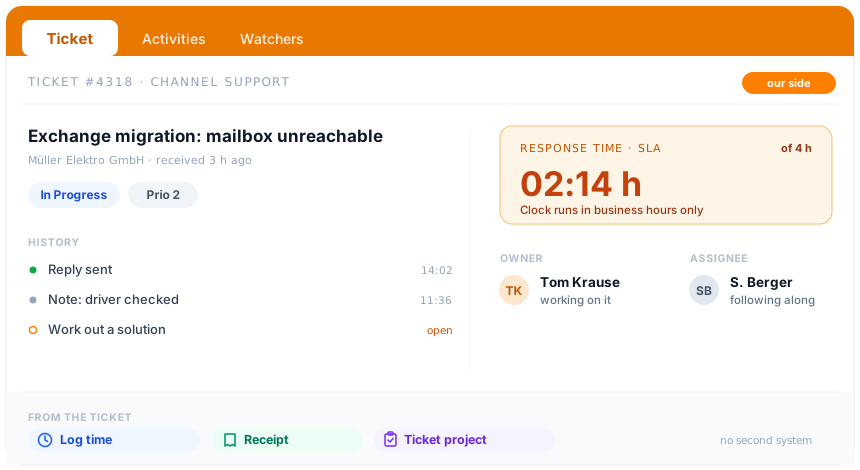
teamspace Service Desk: a ticket with channel Support and a number, status In progress, running SLA time remaining within business hours, owner and assignee as two roles and three follow-on activities Time, Receipt and Ticket project.

At a glance

The ticketing software is one part of the service desk.

The inbound is the start. How teamspace guides a ticket through channels, SLA and billing all the way to the project is shown by the Service Desk overview.

To the service desk software

Context

When a guided ticket system pays off.

Ticketing software captures service requests in a structured way, assigns them to a handler and documents every activity through to the solution. Instead of a shared email address with an Excel list alongside it, it runs every request under a unique number, from the first email to the billed service time.

The switch pays off not from the first ticket, but from the point where the mailbox loses the overview. That happens when several hands work on the same requests, when there is no number for follow-up emails to find each other at, and when service hours worked need to go on the invoice. From then on, ticketing software gives every request a clear place, shows its status and hands the logged time to billing. An unsorted inbox becomes a traceable activity.

First conversation

Let's look at your ticket inbound.

Tell us which channels your requests come through and who works them today. We will line up a guided ticket system with your workflow and say whether teamspace fits.

Frequently asked questions about ticketing software

What is ticketing software?
Ticketing software captures service requests in a structured way, assigns them to a handler and documents every activity through to the solution. Each request gets a unique number under which all emails, calls and notes come together. In teamspace, the ticketing software is part of the Service Desk and connected to CRM, project and billing.
Which channels does teamspace take tickets from?
teamspace takes tickets from email (whole mailboxes can be connected), phone (via the telephone interface) and a web service on your own website. Microsoft Teams can be added optionally, to be activated by the customer. For each channel you can set responsibility, automatic reply and mandatory fields.
Can tickets be created automatically?
Yes. Incoming emails automatically become tickets, matched to the CRM contact by the sender address. Follow-up emails with the ticket number in the subject line automatically land in the same ticket. Via the web service, a form on your website raises tickets directly in the right channel.
Which ticket types are there?
Three: internal tickets for your own coordination, email tickets for external communication with customers and suppliers, and tickets from a request that you raise on behalf, for example after a call. The reply to a ticket from a request automatically goes to the customer by email.
Can custom statuses and workflows be defined?
Yes. teamspace brings four standard statuses (New, In progress, Answered, Closed), across which responsibility shifts between you and the customer. Custom statuses with their own logic are added, for example for queries or approvals. For each channel you set which status transitions are allowed.
How do owner and assignee differ?
The owner works the ticket, the assignee stays informed about the activities. Both can be changed per activity. In addition, people or groups can read along as watchers; the creator and owner are added automatically.
How does the ticketing software connect with billing and projects?
The time logged on the ticket runs onto the linked project and is billed to the minute, in intervals or at a flat rate. From the ticket you can create a receipt or a ticket project as required. More on billing on the Ticket Billing page.

First conversation

Ticketing software assessed in 15 minutes.

Tell us about your service requests, channels and response times. You will hear in 15 to 30 minutes whether teamspace fits.