
Collect where it arises
- Captured quickly as a note or to-do
- From a project, a meeting or an email
- With description, attachment and colour
An open item captures what needs doing: with owner, due date, priority and status. It lands in a list, on a personal pinboard or on a board, and stays connected to project and hours. Part of Teamwork, the foundation of teamspace, included in every edition.
Where you stand
The work is there; what is missing is the overview of who is on what.
An open item is the task in teamspace: one owner, one due date, one status. In "My open items" everyone sees their own stack, sorted by due date and topped up with the ones completed today. Split the stack by project, priority or type whenever you need to.
Angebot Kunde Berg nachfassen
Build-Fehler Staging klären
Onboarding-Wiki fertigstellen
Vorlage für Sprint-Review
Heute erledigt · 3
Day to day
Three things a task management tool has to carry day to day. All three run through the same open item.
Five types
Not every task is the same. Sometimes it is a quick errand, sometimes a goal a team works on for longer, sometimes a problem someone has to clear up. In teamspace all of these are the same open item, just in a different type.
Because all five share the same format, an item travels from scribbled note to distributed task without anyone having to recreate it.
Project link
A task that belongs to a project does not stay stranded in a tool of its own. Once the open item is assigned to a billable project, time can be booked straight from the item.
That way today's small task is the start of the hour billed at the end of the month, and no one maintains it twice.
“Time tracking is far simpler and more convenient than in Excel.”

Lists
When the items pile up, you bundle them in a list. A list of open items is more than a collection: it has a distribution group and works well as the basis for a recurring meeting.
So the meeting is not the end of the tasks but their starting point: whatever stays open is already on the list again at the next meeting.
Next step
In 20 minutes we walk through where your tasks come up, who takes them on and how due dates are tracked today. You get clear initial feedback on whether teamspace fits.
What it is
A task management tool captures what needs doing, who takes it on and by when. In teamspace this unit of work is the open item: a flexible format with owner, due date, priority and status that can be collected, distributed and worked through.
Tasks arise everywhere throughout the day. A meeting throws some off, a project brings its own, a service case leads to one, and the next comes from the inbox. As long as they stay scattered across emails, notes and quick asks, no one knows the full picture. This becomes noticeable at growing service businesses, usually between 10 and 50 employees: there are too many tasks to hold in your head, but no system yet holds them together.
teamspace brings these sources into one database. Because the open item is connected to project, board, calendar and hours, a task does not live in a silo but feeds the analyses that steer the day.
Pinboard and board
Anyone juggling many tasks needs an order of their own. In teamspace everyone pins the items that matter to them onto their personal pinboard and gives them a relevance level from low to top.
So everyone decides for themselves how to sort their tasks, while the team sees the same state on the board.
More from Teamwork
The task is a building block of Teamwork. These areas deepen where it becomes visible and where the knowledge around it sits.
Tasks as cards that travel through status columns from waiting to done.
Learn moreTasks in sprint rhythm, with a backlog and acceptance at the sprint end.
Learn moreAppointments, deadlines and leave in one view for the whole team.
Learn moreGuides and knowledge versioned and linked to tasks.
Learn moreDiscussion and news, separated by topic areas with their own permissions.
Learn moreStore documents versioned, on the board, project and customer.
Learn more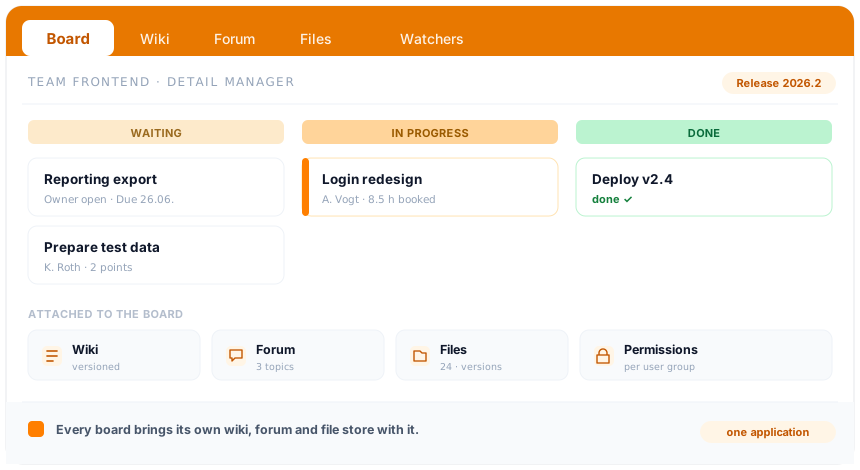
At a glance
The open item is one of the tools a team uses to coordinate its day. How teamspace bundles boards, team calendar, wiki, forum and chat in one application, each board with its own wiki, forum and file area, is shown in the Teamwork overview.
To the Teamwork areaReminders
Task management stands or falls on nothing being forgotten. teamspace does not remind you through a stack of unread emails but through the follow-up on the open item.
Put an item on follow-up and it is presented to you again on the set deadline. On top of that come smart alerts that can be attached to a task. Instead of going through a list every day, the task reports back itself when its date draws near. So the due date stays a date in the system, not a worry in the back of your mind.
The same principle applies to whole lists via the deadline: whatever is open by then appears in the minutes and so on the agenda of the next meeting. No one has to track whether something has fallen through the cracks.
Related modules
Anyone distributing tasks in a team almost always deals with the project, the customer and the booked hour. Here are the shortest routes to them.
The open item becomes the work package: Gantt, phases, plan vs actual and contribution margin, up to date by the day.
Contacts in a campaign sit as cards on the board and stay connected to the customer record.
The task becomes the booked hour: attendance, project time and a digital timesheet with approval.
Intro call
You describe your everyday work with tasks, lists and meetings; we show how teamspace turns it into a pool that everyone on the team can survey.
A task management tool, also called task management software, captures what needs doing, who takes it on and by when. In teamspace this unit of work is the open item: a flexible format that can be collected, distributed and worked through. While a ticket arises in the service desk and is tied to a customer enquiry, the open item is deliberately kept general, from the quick scribbled note to the distributed task.
Tasks arise everywhere throughout the day:
teamspace brings these sources together in one place. A task is not just a title: attached to it are owner, due date, priority, status, colour, progress, comment and attachment.
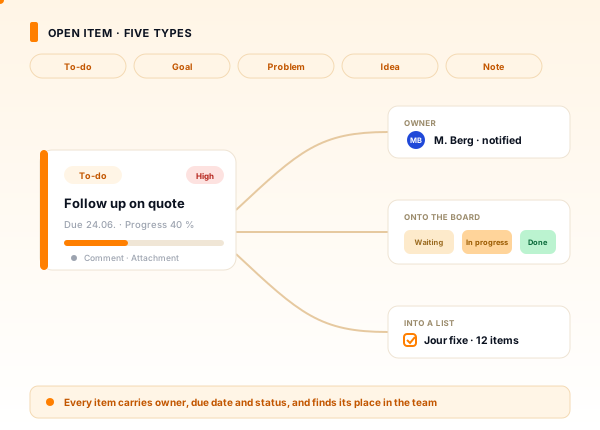
The open item comes in five types, depending on what is being captured. To-do is the classic errand. Goal captures what a team is working towards and shows through its progress how far along it is. Problem describes something someone should clear up, passed to the right person with an image or attachment. Idea and note catch what would otherwise end up on a scrap of paper.
Because all five share the same format, an item travels from scribbled note to distributed task without anyone having to recreate it. The fields a task has stay the same throughout: owner, due date, priority, status and colour turn the title into a matter that someone completes by a deadline.
How a task is displayed depends on the angle. In My open items every employee sees the tasks assigned to them, sorted by due date and topped up with the ones already completed today. Split the stack by project, priority or type whenever you need to.
Alongside it there are further views onto the same pool:
All views work on the same database. A status change in the list takes effect on the board straight away.
When the items pile up, you bundle them in a list of open items. A list is more than a collection: it has a distribution group and works well as the basis for a recurring meeting. All the items for the standing meeting, the client project or maintenance sit in one place, and an item may appear in several lists.
In the meeting, items discussed are ticked off, open ones stay put with owner and deadline. On a deadline the list produces minutes that reach the participants via the distribution group. So the meeting is not the end of the tasks but their starting point.
Task management stands or falls on nothing being forgotten. teamspace reminds you through the follow-up on the open item: put an item on follow-up and it is presented to you again on the set deadline. On top of that come smart alerts that can be attached to a task.
Instead of going through a list every day, the task reports back itself when its date draws near. The same principle applies to whole lists via the deadline: whatever is open by then appears in the minutes and so on the agenda of the next meeting.
The difference from a pure task app lies in the connection. The open item does not live in a silo but is attached to what it is about:
So task management feeds the analyses that steer the day, instead of being a second tool that someone maintains separately. How the building blocks of a team play together is shown in the Teamwork overview.
Wondering whether teamspace fits your everyday work with tasks? In a 20 to 30 minute call we walk through where your tasks arise, who takes them on and how due dates are tracked today. More in the Teamwork overview.