Many service firms value only booked hours at an internal rate in their cost accounting. The actual salary never appears. If Anna Berger takes two weeks' holiday, the figures show 4,400 instead of 7,200 euros of personnel costs. In the final push of a project with 190 hours they show 9,500 euros, although her salary is the same.
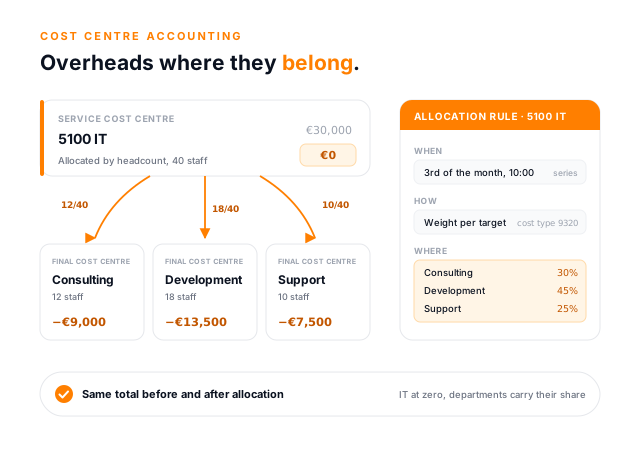
Internal cost allocation with a salary cost centre solves this. The salary is posted twice: once to the department that should see it, and once to a salary cost centre. Every project hour booked relieves the salary cost centre and charges the project.
- Anna, a normal month: 7,200 euros salary, 136 hours at 50 euros each across two projects.
- The hours relieve the salary cost centre by 6,800 euros, leaving 400 euros.
- At month end an allocation distributes the remainder across the projects, here evenly at 200 euros each.
- The department sees the real salary of 7,200 euros; the projects carry the hours plus the remaining share.
The balance before the allocation is the interesting part. It shows whether internal cost rates and utilisation fit together. If consulting has 180,000 euros of salaries against 167,500 euros of hours charged since the start of the year, 12,500 euros are missing. A remainder like that means either the cost rate is set too low or too little time is being booked to projects, perhaps because of bench time, sickness above plan or utilisation below plan. A surplus means overtime, high utilisation or cost rates set too high. These are sample figures, but every service firm faces the question behind them.
Because the salary stays in the department, cost centres and cost objects still add up to the same result. You set up the salary cost centre per department and post the salary every month, per employee or as a total. For now, you create this posting yourself. Permanent staff with a salary cost centre and freelancers without one can be mixed.
Because the salary cost centre and the department hold real salaries, the viewing right there belongs in few hands. If you want to open it up more widely, post salaries as a total per department. How this works is explained in the help centre under Allocate personnel costs via a salary cost centre and Permissions for cost accounting.