
Order billing
An order mixes fixed price, effort and flat rate, and proposes the invoice in one click.
Learn moreMaintenance, licences and subscriptions are services that simply keep running. teamspace runs them as an ongoing contract that raises its own invoice every period and renews until someone cancels.
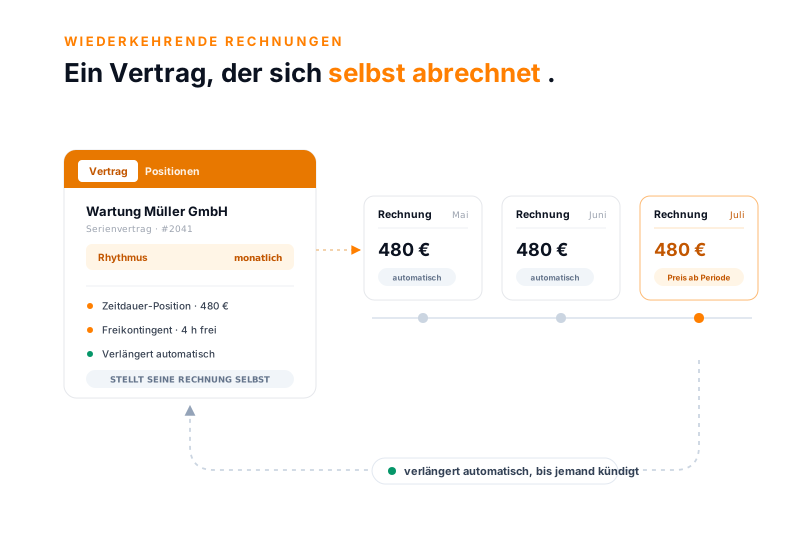
When contracts grow
teamspace runs recurring services as an ongoing contract that bills and renews itself.
An order carries its contract data: it runs, pauses, renews or has been cancelled. From this comes a contract that raises its own invoice every period, monthly, quarterly or yearly.
Einmal eingerichtet, rechnet der Vertrag jede Periode von selbst ab und verlängert sich, bis jemand kündigt.
Included allowance
Maintenance rarely sells as a pure hourly service. A flat rate includes a fixed number of service hours, and only the work beyond that is added to the invoice.
That keeps maintenance predictable, without anyone reconciling hours against the allowance at the end of the month.
Change
When a customer orders two more licences, there is no need for a second contract. teamspace moves the service from the add-on order into the existing one.
Many individual changes become a single contract from which the current position can really be read.
“I save a lot of time writing invoices.”

Next step
We look at your ongoing contracts: which services bill monthly, quarterly or yearly, and where teamspace raises the invoice for you.
Invoice run
Once the contract is set up, no one has to think about the invoice. An invoice run checks at a set rhythm which contracts are due, and creates the invoices.
Activate everything, and there is little left to do with the ongoing contracts at the end of the month.
Price change
Prices belong to the article, not to a side table. teamspace keeps one price list per customer, with tiers and volume discounts.
That keeps the price clean, from the price list all the way to the recurring invoice.
What remains
Because every period comes from the same contract, teamspace answers the questions that a stack of separate orders leaves open.
Month, quarter, year
at the set rhythm
Renewal
until someone cancels
Allowance included
rest billed automatically
Due to bill now
shows the due contracts
Use cases
An ongoing contract shares line items, prices and status with the rest of the document work.
An order mixes fixed price, effort and flat rate, and proposes the invoice in one click.
Learn moreContract data, status and line items belong to the order, and the filter shows the recurring contracts.
Learn moreA product bundles all document line items and shows who has been receiving which licence and since when.
Learn moreOpen receivables climb through several stages, each with its own deadline and fee.
Learn moreZUGFeRD and XRechnung are created on dispatch, for the recurring invoice too.
Learn moreChecked travel expenses land on the right order and on the customer invoice.
Learn more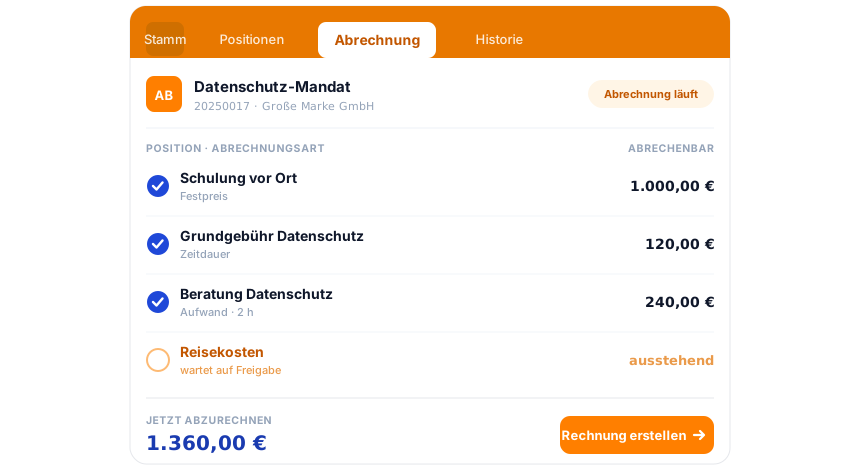
Part of the invoicing software
An ongoing contract is an order that raises its own invoice again and again. Line items, flat rates and travel expenses gather on the order until it proposes the finished invoice. Quotes, dunning, e-invoicing and the DATEV booking data service run in the same system. The invoicing software overview shows how it all fits together.
To the invoicing softwareWhat it is about
Software for recurring invoices runs services that simply keep going as contracts with their own term: maintenance, software licences, managed services, rent and subscriptions. Instead of writing an invoice by hand for every period, the order runs as a recurring contract and raises its invoice at the set rhythm, monthly, quarterly or yearly.
The benefit shows in day-to-day work: the ongoing contract comes from the contract data and renews automatically until someone cancels. Order billing bills the single order alongside, with its mixed line items, and product management shows per customer which products they receive today.
We have been developing teamspace in Darmstadt since 1999. It runs in an ISO 27001 certified data centre in Frankfurt am Main, with data processing exclusively in the EU. The contracting party is 5 POINT AG, a German public limited company under German law.
Related modules
An ongoing contract draws from three modules and gives back to them.
Hours logged on maintenance and service are the basis of every effort line item beyond the included allowance. Logging and billing run on the same employee.
The project comes from the order, with budget, phases and team. Effort and flat rates flow back into the invoice.
Organisation and case record who holds which contract. The renewal becomes the sales opportunity.
Initial call
Show us a typical maintenance or licence contract. In a short conversation you will see how it bills and renews itself in teamspace.